Saturday, July 28, 2007

The Art of Stone and Water


Meet Ahmad NadAlian!

Born in 1936, in a small town, Sangsar in Iran, Nadalian has become an artist of the world. Nadalian has majored in painting in Tehran University's prestigious faculty of Arts (1988) and has a PhD in philosophy from University of Central England.

His Web site introduces him as: "A human who loves stones and water, Ahmad Nadalian moves like a fish transgressing international borders. Nadalian has traveled widely, leaving graphic messages on all continents bAntarctica in the form of etched stones, thousands of them, large and small, on which he has inscribed or painted fish, crabs, nautilus spirals, and human hands, feet, and faces."

His fame became global when he presented his River Art Project in the 50th Biennale of Venice. Since then, he is invited to many countries by different art centers and his work is scattered in Italy, Germany, USA, Spain, France, Uzbekistan, Bangladesh, Lebanon, Australia, Burkina Faso, Chad, Egypt, Netherlands, Switzerland, Russia, Japan, India, Brazil, China, Greece, UK, Finland, Morocco, South Korea, Ireland, Brazil, ... where many of his work remains hidden in nature, archaeological treasures to be discover

In review of his work, writer and art critic John Grande writes:
"Nadalian is an Iranian sculptor whose life's work involves engendering respect for living creatures and the natural environment. To achieve this, besides living with nature himself, he established sculpture grounds in a peaceful environment in natural surroundings. Water is a living element that contributes to his sculptures, and many of the symbols he engraves and sculpts are derived from ancient mythology and the rituals of pre-Islamic civilizations(--Life-affirming rituals that are part of the philosophy of ancient Iranian mysticism, according to NadAlian himself.)

Nadalian's art is expressed through a variety of media, including rock carving, environmental art installations, ritual art performances, figurative paintings reminiscent of ancient drawings, video art installations, web art works, and interactive pieces requiring public participation. Nadalian spends most of his time in the mountain region of Damavand in Iran, and his River Art is Nadalian's Haraz River project, near Mount Damavand.

Located near the village of Ploor, 65 kilometers from the Teheran- Amol road, Nadalian designs sculptural form direct in nature; on the riverbanks are human figures, hands, feet, birds, goats, crabs, snakes and fish. Symbols of the Zodiac, the sun and the moon surround these designs, reminding the viewer that the images are not merely representations of nature, but symbolic concepts. What Nadalian intends is for the spectator searching for the artwork to perhaps discover something more valuable than his stones in nature. (Read Grande's interview with NadAlian.)

Saturday, July 21, 2007

Nazis attack Iran

... writes Margaret Kimberley


"The Americans think it is ridiculous and libelous to accuse them of acting like Nazis - and then they do. The planned attack on Iran, a people we know no better than we knew the Iraqis, will be a slaughter for which the world will hold the American people accountable. The Democratic assemble of presidential candidates - with the exception of Rep. Dennis Kucinich and former Sen. Mike Gravel - are all down for the debacle. Blood seems to be as much a part of the campaign menu as money. The only party that profits from this is the Israeli lobby, the biggest game in town.
...
Americans take great offense when their actions are compared to those of Hitler's Germany. When Democratic Senator Richard Durbin correctly stated that interrogation methods used at Guantanamo were akin to those used by the Nazis or Pol Pot's Cambodia, he was vilified by Republicans and Democrats alike. He was eventually forced to make a public retraction on the Senate floor. God forbid that Americans should be compared to Nazis.
...
...
Senator "Holy" Joe Lieberman wants war with Iran. His sick dream is now on the road to becoming reality because of an amendment to the Defense Authorization Act that he sponsored. The amendment states as fact that American soldiers have been killed and wounded by Iranian attacks in Iraq and requires periodic intelligence reports of Iranian activity in Iraq. The fix is already in, as the old saying goes. Every report will assert that Iran is behind every bombing, shooting or report of bad weather in Iraq. The amendment passed unanimously, 97-0.
...
Just as Joe Lieberman stoked the fires of war in Washington, Avigdor Lieberman, a member of Israel's parliament, claimed that NATO gave Israel permission to attack Iran. Lieberman is quite an outspoken racist who has called for the mass killing of Arabs living in Israel. It is an odd coincidence that he made his claim just as the American Lieberman got his ducks in a row to begin the countdown.

The Nazi comparison is accurate even when applied to Israelis or to American Jews like Joe Lieberman. They can be called fascist if they promote fascist ideology. The two Liebermans shouldn't be allowed to use the suffering of their own people to mask their own evil doing. It wouldn't be the first time that members of an oppressed group gladly joined the ranks of oppressors if someone else was the oppressee.
...
The world will ask Americans what they knew and when they knew it. Did they know that Iranian president Ahmedinejad never said Israel should be "wiped off the map?" Did they know that Israel is a nuclear power under no threat from Iran? Did they know that the U.S. is holding Iranian diplomats hostage? Ironically, outright lies and deliberate omissions in government and in the corporate media will allow most Americans to truthfully say they had no idea their government had turned them into war criminals."

Read the entire article on Scoop

Wednesday, July 18, 2007

The Conference of Birds


"There's so much more to flying than just flapping around from place to place! A... a... mosquito does that! One little barrel roll around the Elder Gull, just for fun, and I'm Outcast! Are they blind? Can't they see? Can't they think of the glory that it'll be when we really learn to fly? "I don't care what they think. I'll show them what flying is! I'll be pure Outlaw, if that's the way they want it. And I'll make them so sorry..." (Read the book online)

The title is borrowed from Mantegh Al-Teyr by Farid Al-Din Attar (the 12 century Persian philosopher/poet/scientist) which is in deed the precursor of Bach's Jonathan. (if you can read Persian, look for Attar on http://www.persopedia.com/)
(early 17th century depiction of Attar's conference of the Birds by Habib Allah)

In Iran, Jonathan the Seagull was beautifully translated by Soudabeh Partowi, and published under "Parandeh-i be nam-e Azar-baad" (a bird called Azar-baad; Azarbaad could be considered a polyseme. It is a Zoroasterian name, literally meaning something like "sustained flame" or the "ablaze-wind"; the latter rather a wordplay).

Saturday, July 7, 2007

The Sound of Kindness

17th Century paintings
Above, from Hasht-behesht Palace.
Below, from Chehel Sotoon Palace.


Iran celebrated The Woman's Day by holding a women music festival "The Sound of Kindness".
Iran's female musicians, with the exception of a few, have traditionally been vocalists. In early years after revolution, the female musicians suffered a setback brought about by Islamic restriction under strict orders of Khomeini. Towards the end of his life, however, he moderated his views and permitted classical and traditional music to be played and taught in public. Suddenly, music instructors popped like little mushrooms.
Although segregated as solo singers, women are pushing the boundaries of performance on stage. The recent female music festival was held under Ahmadinejad's renewed Khomeinist zeal against music. Thus I find it important to take note of it now! Unfortunately, I do not have access to reports and reviews. The pictures are obtained from the Payvand News. Any additional reports or information is appreciated.

Friday, July 6, 2007

blame-blame/bomb-bomb

In case you wonder the title is the sound of 4th of July fireworks ... nope! For whatever reason, after a relative media calm about Iran, the NYT has launched it's blame-blame bomb-bomb campaign against Iran this morning.

Greg Mitchel warns against NYT's amnesia: in Consider the Source!

...

In other news:

The United States representatives propose to support an Iranian terrorist group: MKO! and this comes just as the EU makes a move against the MKO's armed opposition to the Iranian Government

The MKO has terrorized Americans
The MKO has terrorized Iranains
The MKO has terrorized the MKO members!
The Iranian regime massacred the young and at times teenage MKO members in the Evin Prison (and else where) in the mid 80s.
The MKO joined the Iraqis in invading Iran (Operation Mersaad) in the mid 80s.
The MKO was disarmed after American invasion and the fall of Baghdad.
The Iranian government granted amnesty to the MKO members who wished to return to Iran; but also stated that they would be interrogated upon return.

As (since Mersaad Operation) I hold the MKO below contempt, I will not dedicate any time more than I have to them. Feel free to google them up.

Monday, July 2, 2007

Women & Bikes: the freedom machines


The Islamic Republic of Iran has devised an "Islamic bicycle." This new vehicle comes fully equipped with a cabin to conceal parts of a female cyclist's body.

Why, you may ask?

Because it stimulates sexuality, in both sexes, easily. And because the country's supreme leader, Ayatollah Ali Khamenei, announced in 1999 that "women must avoid anything that attracts strangers , so riding bicycles or motorcycles by women in public places causes corruption and is thus forbidden."

In short piece in the USA Today, Farzaneh Milani draws attention to the 19th-century America, where the newly invented bicycle, which was also used by women, was seen as a threat to the social order and a provocation to promiscuity.

Like Milani, I think that the recent bicycle ban, and the Islamic bicycle are more of the same futile attempts to control Iranian women. I just wish these old men and their vigilantes stopped making fools of themselves! If their pressures were to work, Iran's car racing champion would not have been a woman.

But Iranian women such as Poupeh Mahdavinader have shown their power on bike wheels (even though she has had to endure racial slur in the UK!)

Of course, they may export their Islamic bicycle to other Muslim countries, like Saudi Arabia, where women are even deprived of driving a car.

If you click on the picture "The day I became a woman", you will learn about another Iranian film. This one is somewhat surrealist. A nice one though. And applauded by many a festivals around the globe.

Saturday, June 30, 2007

Delshodegan


I just watched Delshodegan. Another lavish production of the Ghajar years, by Ali Hatami, about whom you will perhaps never hear unless you are an Iranian. I am not surprised that he is not discussed in the international forums that are all crazy about the Iranian cinema. Nor is Baizai. These directors are not catering to the facile digestion of the universalist postmodernists, although their style is full of such elements as well. Yet, they demand engagement with folklore, language and history. Someday, there will be an Iranian who will write about the importance of Hatami's work in reconstruction and preservation of the Iranian national heritage on celluloid during the years of chaos: revolution and war.

Anyways, this film, Delshodegan, is about the Iranian classical musicians in Ghajar era and their struggle to release their first record which takes them on a journey to France. It's an artsy film. Neither aims to nor succeeds in being entertaining. It is sensational. And a delight to eyes and ears.

So much of Iran is underexplored, a hidden jewel ... it is a collective loss ... I detest all those who have cut it off the world ... and have muddied it ... I wish I had access to enough material to write about Hatami. I don't because I am so far from Iran. For now, I just watch bad copies of his work on video CDs, and imagine how it would have looked on film and sigh: who will replace him?

Monday, June 25, 2007

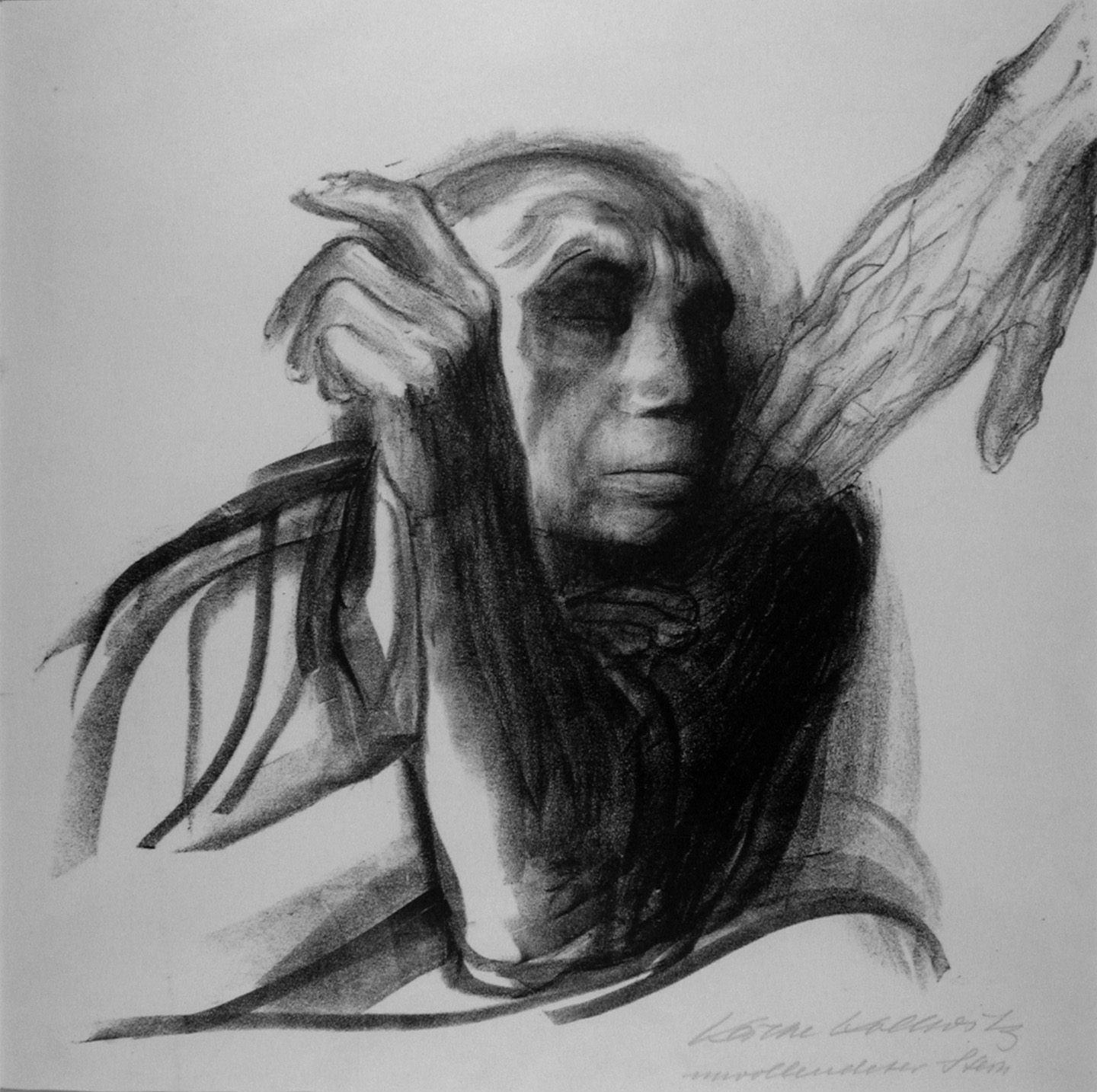
I never have feared death
even though its hand
is heavier than vile
My fear all
is to die in a place
where
the wage of the undertaker
is higher
than the price of
a man's freedom

Excerpt from Ahmad Shamlou


and my favorite sketch of Kathe Kollwitz

Sister, remember?

For more poems see http://www.shamlu.com or http://www.shamlou.org. The wikpedia entry spells his name as Shamlou.

Saturday, June 23, 2007

Monday, June 18, 2007

take two.


Stones


Mirrors

Bridges

Flowers

My weekend photos


It's interesting how the colors turned out as I uploaded the images on blogger. For original colors, click on images. eeerm ... actually all the colors are mangled. Oh well this is joint art, by me and the color coding process of google :)

Sunday, June 17, 2007

BrainDrain

Disgruntled still, that my fellow Iranian colleagues were not granted visa to attend a scientific meeting in the USA, I woke up to news about the slurring comments of a McGill professor of chemistry (David M Ronis) an opponent to reinstating the membership of 14 Iranian scientists in the American Chemistry Society (ACS)

So they are toughening their sanctions and trying their pressure tactics and then lamenting the huge cost of Iranian brain drain, overlooking, of course, the Anglo-American contribution to the brain drain in countries such as Iraq!

While most of the blame about the alarming rate of the Iranian brain drain falls on the IRI's failing economic an cultural policies, few critiques talk about the direct role of American sanctions on science and technology (and thus economic) development in Iran.

It is also ironic that the US of A happily absorbs the scientists' exodus! Like most scientists, the greater majority of Iranian academics have little existentialist quarrel with politics, as long as the political system funds them to address their research interests. A factsheet of the success rate of the Iranian-American community, puts in perspective the advantage of Iranian brain drain towards West.

According to a study by Ali Mostashari and Ali Khodamhosseini from the Iranian Studies Group at MIT, the 2000 US Census indicates that
The Iranian ancestral group have educational attainments that greatly surpass the national average. In general, the percent of the Iranians over 25 years old who have obtained a bachelor’s degree or higher was at 57.2% in comparison to 24.4% for the rest of the U.S. population. With more than 27% of Iranian-Americans over the age of 25 having a graduate degree or above, Iranian-Americans are the most highly educated ethnic group in the United States. With respect to the gender differences Iranian males and females are both more educated than the U.S. average values. Percentage-wise, Iranian-Americans hold five times the number of doctorates than the national average.
...
The per capita average income for Iranian-Americans is 50% higher than that of the nation, while family average income is 38% higher. ... The percentage of Iranian Americans living in homes valued more than $1 million is nearly 10 times that of the national average.
... (PDF

(for more information see the research reports at Iranian Study Group MIT)

However, to study and train in North America, is not entirely disadvantageous to Iran as it also opens the horizon of career opportunities domestically. In Returning to Iran: Challenges and Promises the authors report that
returning to Iran is a decision often motivated by emotional and patriotic connections to Iran rather than rational calculations. Moreover, level of satisfaction differed across participants and correlated with their success in achieving their career goals in Iran. Cultural and structural barriers to working effectively have been the biggest challenges to most participants while emotional ties and outstanding students have contributed to positive experiences.
Nevertheless, it appears that those who were successful in achieving some of their goals with regard to contribution to Iranian society, and had developed a successful career, were happier with their decisions. A few tentative trends which partially explain the successfulness of different initiatives include:
- There are many potential opportunities in the industry that can be successfully used. ... Examples include information technology, consulting, and financial markets. ...
- Entrepreneurship and institution-building remain central to creating opportunities. Despite some increase in recent years (mostly due to international investments and new large firms) there are few pre-specified, well-paying jobs available. Successful people tend to create the opportunities themselves through starting new ventures which satisfy some unmet need. In short, people who are interested in taking the risks of entrepreneurial activity have better prospects of job satisfaction and making a significant contribution to the Iranian society.

- In the academia the structures are more clearly defined and entrepreneurial activity (e.g. starting a new department or program) is less of an option, with the possible exception of new and growing fields such as management and economics. Under these conditions success is harder, and depends on skills and criteria beyond research aptitude, to secure funds, steer the politics of the departments, and do quality research given very limited resources. The chances of doing quality research also depends strongly on the specific area: theoretical and applied research often have higher chances of success than experimental fields where the resource and equipment become a significant disadvantage for Iranian researchers compared to the international competition.

Let's thank the sanctions for that too.

Summertime

Vivaldi's Song by Michael Franks.

Enjoy the lovely song; thanks to Nunya.

Saturday, June 9, 2007

Iran Pop in Europe


Arian Band is the first ever band consisting of both men and women singers and players in Iran and the first music group to represent Iranian pop music. Their debut album, "Gole Aftabgardoon" (The Sunflower) was released in 2000. The album had huge success in Iran. The band was recently nominated for the BBC World Music Award.

The Band will take Iran's pop melodies to Europe and North America for a joint summer performance. The band is to perform 9 concerts this September in U.S., Canada and Europe and then finish off with a final concert in the United Arab Emirates. (Payvand News)

Thanks to Brother Tim's suggestion: Here's a sample called Immortal Iran.

Miles for Peace

click on the image for more info.

Sunday, June 3, 2007

Don't muddy the water ...


Translated by Jerome W. Clinton.
Source: Words Without Border


Let's not muddy the water.
Imagine that close by a dove
is drinking from it,
or in a distant grove a finch
is washing its wings in it,
or in some village it fills a storage jar.

Let's not muddy the water.
Perhaps this flowing stream runs
by the foot of a poplar tree
and eases some heart's grief.
A dervish, perhaps,
has moistened his crust in it.

A young woman stood on its bank---
the water doubled her beauty.
Let's not muddy the water.

How delicious this water is!
How refreshing this stream!
Those people who live upstream,
how fortunate they are!
May their springs be ever fresh,
their cows always fertile!
I haven't seen their village,
But surely, God's foot is on
their threshing floor and
the moonlight there illuminates
the width of their words.

The walls are low in the village upstream.
Blue there is really blue.
When buds blossom, they know, those people.
What a village it must be!
May its streets be filled with music!

Those people by the stream
Have left it clear.
Let's not muddy the water.

New Crazies

Thus spake Mohammad Elbaradei

"I wake every morning and see 100 Iraqis innocent civilians are dying," he said. "I have no brief other than to make sure we don't go into another war or that we go crazy into killing each other. You do not want to give additional argument to new crazies who say 'let's go and bomb Iran.'"

Asked who the "new crazies" were he replied: "Those who have extreme views and say the only solution is to impose your will by force."


And Cheney says "I'm not a new-crazy" ... well he is an old one now!

And Rice rushes to say me neither!

And then Larijani says No problemo ...
"We are determined to solve Iran's nuclear dossier today. We do not need to kill time because the country has obtained its nuclear capacity and is ready to reach agreement through constructive talks."

Wisdom's in the air!

Tuesday, May 29, 2007

Iran & US

Thinking the unthinkable, or the logical?

"Anti-Iran hawks will be horrified at the idea to partner with Iran against al-Qaida. Iran’s ties to Hezbollah and Hamas, they will claim, establish Iran and al-Qaida as woven from the same terrorist cloth.

But such charges gravely distort reality. There is no such a thing as good and bad terrorism; terrorism kills and maims innocent civilians, regardless of the cause. But failure to grasp the importance of conflicts between al-Qaida and Iran benefits al-Qaida and blinds us to common American and Iran-ian interests in the peace, security and stability of Iraq.

Ideologically, the worldviews of Iran and al-Qaida clash. Iran is a status quo power, and al-Qaida is a revolutionary non-state terrorist actor. Iran seeks to shore up its national security interests, whereas, al-Qaida aspires to tear down national boundaries and re-establish the caliphate, the seventh-century Islamic empire.

To al-Qaida, jihadists serve its chiliastic mission of establishing Islamic rule worldwide. To Iranian leaders, Hezbollah and Hamas function as deterrents to Israeli military strikes against Iran.

Al-Qaida leaders are unlikely to abandon their holy war against the West and Israel. By contrast, Iran has offered to discuss its ties to Hezbollah and Hamas and to accept a two-state solution in the Israeli-Palestinian conflict.

Such underlying philosophical differences between Iran and al-Qaida were on display in the wake of the savage attacks on America on Sept. 11, 2001. Within hours of the attacks, Iranian President Mohammad Khatami condemned them as "assaults on human dignity and rights" and told the world later that the attacks were perpetrated by "a cult of fanatics" who could communicate with perceived opponents only "through carnage and devastation."

Iran’s supreme leader, Ayatollah Ali Khamenei, was the first Muslim cleric in the world to declare holy war (jihad) against terrorism as a "global scourge." Thousands of ordinary Iranians held candlelight vigils for the American victims of terrorism."

read more of professor Ramazani's column in the Daily Progress ...

Also, Trita Parsi's take on Bush's Anti-Diplomacy


===================================================
From discourse of democracy, to discourse of normalization

Fouault, a Mullah Lover?

In the 37th issue of the New Politics, Janet Afary and Kevin Anderson offer their analysis of Foucault's relationship to the Iranian Revolution:

The Seductions of Islamism Revisiting Foucault and the Iranian Revolution

Selective excerpts:

Progressive and leftist intellectuals around the world were initially very divided in their assessments of the Iranian Revolution. While they supported the overthrow of the shah, they were usually less enthusiastic about the notion of an Islamic republic. Foucault visited and wrote on Iran during this period, a period when he was at the height of his intellectual powers. He had recently published Discipline and Punish (1975) and Vol. I of History of Sexuality (1976) and was working on material for Vol. II and III of the latter. Since their publication, the reputation of these writings has grown rather than diminished and they have helped us to conceptualize gender, sexuality, knowledge, power, and culture in new and important ways. Paradoxically, however, his extensive writings and interviews on the Iranian Revolution have experienced a different fate, ignored or dismissed even by thinkers closely identified with Foucault's perspectives.
...
Foucault staked out a series of distinctive political and theoretical positions on the Iranian Revolution. In part because only three of his fifteen articles and interviews on Iran have appeared in English, they have generated little discussion in the English-speaking world. Many scholars of Foucault view these writings as aberrant or the product of a political mistake. We believe that Foucault's writings on Iran were in fact closely related to his general theoretical writings on the discourses of power and the hazards of modernity.
...
Elsewhere in the English-speaking world, where Foucault's writings on Iran have been only selectively translated and the contemporary French responses to him not translated at all, his Iran writings have been treated more kindly. His last two articles on Iran, where he rather belatedly made a few criticisms of the Islamic regime in the face of the attacks on him by other French intellectuals, have been the most widely circulated ones among those that have appeared in English up to now. They are the only examples of his Iran writings to be found in the three-volume collection, The Essential Writings of Michel Foucault, issued recently by the New Press (Foucault 2000).
...
oucault carried out a probing analysis of the shah's regime in his October 1978 article for Corriere della Sera, "The Shah Is One Hundred Years Behind the Times."1 He wrote that in Iran, "modernization" took the form of the shah's authoritarian policies. Situating himself in a postmodern position, he argued that the shah's plan for "secularization and modernization," handed down by his father Reza Shah, a brutal dictator known for "his famous gaze," was itself retrograde and archaic. Here one can discern echoes of his Discipline and Punish, published three years earlier. The Pahlavi shahs were the guardians of a modernizing disciplinary state that subjected all of the people of Iran to the intense gaze of their overlords. Most notably, Foucault was criticizing the surveillance methods and disciplinary practices adopted by the regime of Muhammad Reza Shah and his notorious secret police, the SAVAK, whose methods and practices remained brutal and retrograde.

Later, in February 1979, just after Khomeini had assumed power, Foucault made an astute prediction in his article, "A Powder Keg Called Islam," also in Corriere della sera. He mocked the hopes of French and Iranian Marxists, who had believed that Khomeini would now be pushed aside by the Marxist Left: "Religion played its role of opening the curtain; the Mullahs will now disperse themselves, taking off in a big group of black and white robes. The decor is changing. The first act is going to begin: that of the struggle of the classes, of the armed vanguards, and of the party that organizes the masses, etc."
...
In ridiculing the notion that the secular nationalist or Marxist left would now take center stage and displace the clerics, Foucault made a keen assessment of the balance of forces. Indeed, he exhibited quite a remarkable perspicacity, especially given the fact that he was not a specialist on either Iran or Islam. Even more importantly, he noted, a new type of revolutionary movement had emerged, one that would have an impact far beyond Iran's borders and would also have major effect on the Israeli-Palestinian conflict: "But perhaps its historic importance will not hinge on its conformity to a recognized �revolutionary' model. Rather, it will owe its importance to the potential that it will have to overturn the existing political situation in the Middle East and thus the global strategic equilibrium. Its singularity, which has constituted up until this point its force, consequently threatens to create its power of expansion. Indeed, it is correct to say that, as an �Islamic' movement, it can set the entire region afire, overturn the most unstable regimes, and disturb the most solid. Islam -- which is not simply a religion, but an entire way of life, an adherence to a history and a civilization -- has a good chance to become a gigantic powder keg, at the level of hundreds of millions of men."
...
As to the saintlike Khomeini's advocacy of "an Islamic government," Foucault was reassuring. He noted that "there is an absence of hierarchy in the clergy" and "a dependence (even a financial one) on those who listen to them." The clerics were not only democratic; they also possessed a creative political vision: "One thing must be clear. By `Islamic government,' nobody in Iran means a political regime in which the clergy would have a role of supervision or control. . . . It is something very old and also very far into the future, a notion of coming back to what Islam was at the time of the Prophet, but also of advancing toward a luminous and distant point where it would be possible to renew fidelity rather than maintain obedience. In pursuit of this ideal, the distrust of legalism seemed to me to be essential, along with a faith in the creativity of Islam." {{this makes me think of Pen Name}}
...
While many prominent French intellectuals had become caught up in the enthusiasm of the Iranian upheaval in late 1978, none to our knowledge followed Foucault in siding so explicitly with the Islamists against the secular Marxist or nationalist left. Others with more background in Middle Eastern history were less sanguine altogether, notably the leading French specialist on Islam, Maxime Rodinson. An historian who had worked since the 1950s in the Marxian tradition and the author of the classic biography Muhammad (1961) and of Islam and Capitalism (1966), his leftist credentials were very strong. Rodinson's prescient three-part article entitled "The Awakening of Islamic Fundamentalism?" appeared on the front page of Le Monde in December 1978.

...Rodinson poured cold water on the hopes of many on the left for an emancipatory outcome in Iran. He pointed to specific ways in which the ideology of an Islamic state carried with it many reactionary features: "Even a minimalist Islamic fundamentalism would require, according to the Koran, that the hands of thieves be cut off and that a woman's share of the inheritance be cut in half. If there is a return to tradition, as the men of religion want, then it will be necessary to whip the wine drinker and whip or stone the adulterer�Nothing will be easier or more dangerous than this time-honored accusation: my adversary is an 'enemy of God'."
...
Foucault never responded directly to these various attacks on him in the reviews of Iran: la Révolution au nom de Dieu. Unlike some of the previous attacks on his writings, for example those by Sartre and de Beauvoir on his The Order of Things (1966), hardly anyone defended Foucault's Iran writings. One exception was the post-structuralist feminist Catherine Clément, who wrote in Le Matin that Foucault had simply "tried to discern what has escaped our intellectual expectations" and that "no schema, including that of �Human Rights' within our tradition, can be applied directly to this country, which makes it revolution from its own culture." Foucault published two more articles on Iran in April and May 1979, one of them for Le Monde, in which he made a few very mild criticisms of the revolution. Then he lapsed into silence over Iran.

Sunday, May 27, 2007

What's behind the chain arrests?

Last year, at around this time, Ramin Jahanbegloo, the junior Iranian-Canadian professor of political science in University of Toronto was arrested in Tehran, on the charges of endangering the Iranian national security. After the usual human-rights complainst, and the usual profile-makings of the IRI, that serve little purpose but media buzz, he was released. His books are being published in Iran by the Ney publishing house (Nashr-e Ney) and quite a few of those were on display at Tehran's international book fair this year.

I have not read his books. My brother (who lives in Iran, and works in Iran, and whose civil and intellectual liberties are subject to the same kind of limits as others) has; and he felt they read like a "PhD dissertation" and tenure-track-aimed publications. In other words, he considers them "still" raw, and he finds Michele Foucaults' Disciplin and Punish--which is also translated and available in Iran--a far more "dangerous" book than Mr Jahanbegloo's The Forth Wave (I'm not sure what it is in English/French, but here's an English work of his Iran, Between Traditiona and Modernity ) for which he was considered a threat to the IRI, and arrested for a few months!! (Nevertheless, Jahanbegloo is a graduate of Sorbonne and a prolific writer ans thus, in the coming years, his name will be quoted in many a political philosophy text books. Good for him, and my hat off to him, and I promise to read his books as soon as I have free time during which I do not blog.)

Anyways, the point is not to discuss philosophy here.

The point is to contextualize the recent arrest of Iranian-American scholars (Haleh Esfandiari, Ali Shakeri from the center for peacebuilding, and Kian Tajbakhsh), on the eve of the long awaited Iran-US talks. Jahanbegloo came to my mind because he was arrested in this very season: mid spring with similar charges of velvet or silk revolution!

So, unless the IRI suffers spring fever, why would it be arresting American-Iranian scholars with no track record of aggression toward IRI, or no neo-conservative related controversy tied to their name?

Omid Me'marian answers, and because I agree with his points, I translate excerpts [I left out a couple of paragraphs of rhetorics]:


What is the message conveyed by the arrest of the Iranian-American scholars in the past few weeks? Who has issued this message; why and towards what objective? Within the three weeks between the arrest of Dr Haleh Esfandiari, and Drs Kian Tajbakhsh and Ali shakeri, what important event has taken place?

All three are well reputed among their colleagues.

Dr Esfandiari has had one of the most realist perspectives on the changes in Iran. Her published articles and speakers she has invited to the Woodrow Wilson Institute indicate her diversion from the hawkish Washington interests: most importantly that Iranians are sensitive to their future and try hard in making their own future, and no one else's will shall surpass theirs.

Dr Tajbakhsh, university professor, researcher and consultant of many Iranian and international organizations, is known to be one of the best specialists in the field of urban sociology. Dr Shakeri, is one of those whose anti-war, in an open democracy, is heard by many.

These individuals, although live abroad, but are considered the national pride of the Iranian diaspora. And now, they are confined under various charges laid on them by the security officials. The dug up evidences on these individuals do not reflect the journalistic genius of the "toopkhaneh" paper [ I think this refers to Keyhan?], rather the availability of the documents to the public. However, the evidence are read with paranoia and are twisted with disinformation. And this shows how empty handed the accusers, and how innocent the accused are. Because, considering the web sites of these individuals, and their publications reveal that the false accusations against them resemble inventions.

[...] such usual spreading of lies aims to both frighten the Iranian diaspora whose heart beats for Iran, and also to send a warning message to those who might aim to use such individuals towards their own [political] goals, unaware that with such "accidental" or 'false" arrests, they are shooting themselves in the foot. [here the author is pointing the finger to the hardliner papers that are putting wood in the fire.]

This is not the first time that the [right-wing] security-organizational-journalistic ring undertakes such projects. Similar instances have occurred several times in the past years and it is possible to predict the outcome. I expect that as I am writing these notes, some of the wisemen of the conservative camp are scolding their hardliners for such impulsive actions; while on the other hand the hardliners are promising the prisoners that they will be free to go if they make a little confession.

Therefore, the stories of arrets, charges of espionage, leaking the interrogations in the headlines of the hardline papers, censorship of the news, refusal to allow access to legal counsel, perpetual lying, fear mongering in sectors of the society and throwing in names that are the objective of the future "intelligence-project", forced confessions and then release without court appearance [remember the British soldiers?] but with a hefty bail, is an old and repeated story, without any intelligence or humanitarian outcome.

Any Iranian citizen likes the intelligence officers to be among the elite. Both qualified and smart, and capable of providing safety and security with minimal expense and maximum cooperation of the citizens, which will lead to trust and satisfaction. But in the most optimistic assessments, the intelligence officers have raised so many false flags that one wonders why they are occupying such posts [makes me think of the CIA and the FBI and Saddam's WMD!]. The picture that these people project of Iran resembles the anti-human right picture that the American war-mongers portray of Iran.
...
Remembering what happened to Hossein Moosavian [the Iranian nuclear negotiator charges with espionage!!!!] and the heavy accusations made by the hardliners of the government, and his release after one week, practically shows that such "profile making" doesn't go beyond intelligence errors that are mixed with the political agenda of certain factions within the government. These agendas are not in line with the interests of the Iranian people, Iran, and not even the IR regime. In a state of crisis, that the regime needs to dedicate all its resources to repel the increasing threats against Iran, these arrests resemble suicide out of fear of death."


My conclusion:
In addition to being a fear-mongering device, this is a smoke-screen because Monday is a sensitive day. Some in Iran, like many in Washington, do not want Iran to sit at a table with the US! Thus, it is important for the government to appear tough on America's possible intervention in internal affairs of Iran. Of course, the Americans are not making it easy for these people, by publicly calling for "destabilizing action inside Iran".
Nonetheless, everyone will be freed unharmed!

Wednesday, May 23, 2007

Sophia's Lebanon

Okey enough of self-soothing Iran-talk. A real crisis is boiling in the Middle East. The Iraq model is being replicated in Lebanon. The Zionists are cheering on while the Lebanese raise arm on the Palestinians. Suddenly, the Palestinian problem has become just an Arab problem. Suddenly Apartheid is not something the Israeli state can be solely accused of. No one describes it better than my blogging inspiration Sophia, with a vast view of the world; and a personal insight into the Middle East.

Tuesday, May 22, 2007

Iran @ The Cannes Film Festival

Again, Iran is upset over an animation block-buster-to-become.

But this time around, I am not upset about any silver-screen conspiracy! There is a fundamental difference between fictitious and propagandist representation of ancient history by some Hollywood producer (in the 300), and an animation brought to screen by the writer herself.

Marjaneh Satrapi's four-volume cartoon series called Persépolis (published in 2000 by the French publisher l'Association) is made into an animation feature film. I don't know what kind of an audience the Persépolis is targeting. Her series pleased me tremendously, because she accurately described every single experience that I had, growing up under almost identical circumstances. It is the simplicity of her expression and the honesty of her realism that touches me. Would someone who hasn't lived that kind of a life enjoy the comics as much as I did? I don't know.

I hear that Persépolis is a contender for the Palme D'Or in the 60th edition of the Cannes Film Festival. Does this nomination reflects Satrapi's and Vincent Paronnaud's (a couple of lovely geeks) success in animation of her story; or does it hinge on the current political relevance of the motif? Or is it just Cannes' almost two-decade-long fascination with anything Iranian--as long as it is miserable enough to be true to "realism"?!

I do not know!

However, Persépolis is not the only Iran-related film at the Cannes this year.

Abbas Kiarostami (the darling of the Cannes, who has recently moved most of his operation under the French umbrella , and has stopped winning the Cannes' prizes) was present among 35 of the world's most famous directors with a 3-minutes short for the A chacun son cinéma, an episodic film comprised of 3-mins works of Cannes-winners such as Wim Wenders, Lars Von Trier, Gus Van Sant, Wong Kar Wai, and Roman Polanski.

Also, Tahmineh Milani is present with a short break from her usual feminist themes.

Interestingly enough, I heard Milani's favorite actress Niki Karimi is on the jury of Cinéfondation and short films.

But over all, Iranian presence at the Cannes has been fading over the past two years.

Is it because the Cannes doesn't accept the films of Ahmadinejad reign, or is it because the better filmmakers of Iran are facing increasing difficulty in finishing their films with a masterpiece quality? Or maybe the increasingly bourgeois-cinema of Iran is not appealing to the spiritualists who discovered the Cinema of the 90s in Iran's version of neo-realism?

No accurate reports, yet! This needs scholarly investigation though.

The credit for this post goes to the grumpy anonymous visitor of this blog :)

Saturday, May 19, 2007

Iranian Experience (5)

The Artist's Forum
(Khaneh Honarmandan)


The Artist's Forum (or--literally translated-- house or organization, call it what you wish) is a nice little corner in the center of Tehran. It's a soothing kind of a place. It is a meeting place of intellectuals, but it also attracts a lot of want-to-become artist students.

The more the number of "want-to-be" artists (and this is not a place for pop artists, mind you), the better. This shows that "high" art (not that I do believe in hierarchies of expression; but this is just to state that the works presented at this venue are often abstract and nonrepresentational) has an audience in Iran.


A few days before my departure, I heard a
close-to-star actor of the Iranian cinema had an exhibition of his woodworks:

The collection displayed Kianian's sculpturing talent on carved pieces of wood that he collected during his travels throughout Iran. I liked them. His collection did make one see a piece of shore-washed wood with a different eye: a totally randomly shaped stick would come to life with a minimal artist's twist, and would reward the senses with discovering a recognizable shape.


Reza Kianian was there himself; surrounded by young boys and girls, who listened on as a young girl interviewed him, perhaps for an assignment in her journalism 101. No bodyguards! No paparazzi. His work was not expensive, 300$ per piece on average; and most pieces already sold.

Speaking of Artist's house, the 4th Annual Theater Forum Festival was happening at the same time as Kianian's show. Unfortunately, I couldn't participate, but only got a wind of, as I went to the House for other business. Here are a few pictures of the closing celebrations. The women in the center in the left picture is Farzaneh Kaboli, a choreographer and dance artist, applauded by her performance group.

In spite of the (national and international) glory of the Iranian Cinema, theater in Iran is still a major and popular art, as evidenced by the number of national and international festivals dedicated to it in Iran.


Friday, May 18, 2007

Iranian Experience (Anna's)

A couple of days ago, I was telling one of my colleagues how I didn't dare sending him to Iran alone, fearing he would be traumatized.
"Why", he asked?

"First, since, unlike its neighbors, Iran has never been colonized, Iranians do not have a second language and thus you will have difficulty getting by", I said; "and secondly because you won't find beer!"

He laughed. "The secnd will traimatize me", he joked.

I am always fascinated by how the others see Iran. My flight to Iran was half full of British citizens. I wondered what they were going to Iran for. They looked so helpless trying to fix their gigantic scarves on their heads. And they seemed nervous. Entring Iran is nerve wrecking even for me; there is always the anticipation of something unexpected.

Anna is one of the visitors of this blog. She is a German Swiss (a little shy to write in English). Practically, that is all I know about Anna. She told me that she was in Iran at the same time that I was; late April. And she kindly allowed me to share her experience in Iran with the blogsphere. Here it goes, unedited (but I endulged in color coding the parts of her letter that struck me emotionally)

As somebody who kept for herself a mostly contemplative, psychologic and philosophic look "at the world“ and apparently being ab ovo just suspicious about any kind of cultural arrogancy, propagandistic, cynic endeavourings to create all over again „concepts of enemies“ with all this arrogant, despicable looking down at others as a method to to elevate oneself. I always considered it to be important to keep for oneself something just called openness, interest, love and looking at things and people without indoctrinated, „useful“ prejudicies. But sometimes it just makes me sad to recognize, that we never get to see something "new under the sun“ ... just the protagonists and ruling moron’s names are changing.

I had the chance to feel me with this attitude of modesty (not to be confused with clueless simple-mindedness) to be "on the right side" during my yearlong and repeated stays in the former Sovjetunion aka and thanks to Reagan „The realm of evil“ whose people according to the useful prejudicies were just seen as heartless roboters or at least pitiful slaves, condemmned to live in chaines and without any freedoms. While I with exactly such people there have all over again spent unforgettable times. Liberty indeed is one of the greatest things mankind is capable to imagine and of course one all over again has to fight for it because it’s not falling from heaven like manna. But I am convinced, that it is so great – and not as paradoxon or contradiction in itself! - that it also can be lived in a nutshell-size ... just out of the hearts, the mindset and the spirit of people and all the ways they find to show, practice and live it. Something and its possibilities which especially in the spoiled West seems to be beyond imagination, where liberty just too often gets confused with "anything goes“ and paradoxically or nevertheless and often just is resulting in an unstillable hunger and endless search for somehow never to be reached what’s called "sense of life“.

And now the same happened to me in the downright heart of "the axis of evil.“ ... something that hasn’t really surprised me though but nevertheless touched my heart and soul. And the very best I could wish all those who use to call me 'terrorist-sympathisant and islamofascist’just because I’m not singing in their chorus of hateful ignorant chlichées, suspicion and arrogancy is „go to Iran and meet with its impressing and overwhelming beauties and richness in culture and landscapes and the openhearted friendlyness of people ... perceptable literally wherever one goes. And regarding the women: Yes, they are under the chador or with headscarf unless not at home, but even „on the street“ you’d be just surprised about their very self confident behavior. And see all the obviously loving fathers with the baby on their arms or holding by his hand if it’s capable to walk on own legs ... men you just use to call rapers. Get the honor to be invited into rooms of privacy and instead of feeling just nothing but ashamed about your world of nothing but prejudice and arrogancy, see and learn and finally just stop humiliating and hating the people because of their problematic rulers or maybe their religion. For YOUR rulers, having sworn by the Almighty and the Bible are problematic too!“

My trip led me from Tehran to Kashan, Abanyeh, Nain, Yazd, Zeyn-o-Din > an old (from time of Safavid-Dynasty), at the edge of Dasht-e Kavir singly standing caravansery where we stayed over night and felt like in an almost unrealistically beautiful oasis out of every time. Some tryed to verify its reality by talking a lot, two others just standing silently embraced on the roof and looking into the „talking“ endlessness of heaven and its stars. Then Shiraz, Persepolis, Esfahan and back to Tehran ... and of course these two weeks just passed by all too quickly. I was trying to catch the impressions with my camera too and also did ... but it has come true once again: I seem to be a bad photographer, or in other words: MY best and most reliable camera always turns out to be that of my very heart :-).

How could photos ever include or reproduce what you really see and feel, all your perceptions by all senses, all these „picture accompagnying“ fragrances and sounds: This exemplaric (!) man in Abanyeh for example talking with his Beo-bird and the Beo-bird with almost everybody. Schoolclasses who had their drawing-lessons somewhere outside and proudly whould show their works and wanting to know what we think about, do we like it, and for goodbye laying a flower in one’s hand and saying with a smile „come back to Iran again!“.

The overwhelming persian music we were invited to enjoy in an appartment in Shiraz, where the 80 years old, now practically blind and deaf violinist Ali Jabarian with 20 pretty sexy and elegantly dressed young ladies (all students in any kind of disciplines) played and sang for us. But not just for us, for themselves too! It’s all together about 60 young women who – and who from them ever has the time to - at least once a week are meeting there and cultivating this wonderful „hobby“ on an absolute worldclass level, I shouldn’t miss to mention here. The fragrances in the bazars, not to speak of those of the orangeblossoms, levkoyas and roses hovering now over the most wonderful gardens and parks like tender veils and often even together with additionally gentle sounds. And all the people, children and families enjoying these atmospheres. The four men sitting in a corner of the Esfahanian Si-o-se Pol, chanting Qu’ran-verses ... no-no ... not those about defending religion by the sword!!! I just remembered Khalil Gibran having answered somebody at the question „What’s for you the most important in the Qu’ran?“ „The most important for me is a flower I years ago have laid between its pages“, he answered. What a wonderful answer!

And so on and on. And no! I do not deny or dispel all the obvious and lurking problems and complications, also deficits in what is called freedom and equal justice for everybody, men AND women, and so on. Just I’m not willing to stare just and exclusively at them and overlook everything else existing as well! These are processual developments and they must go on and be intensified from inside Iran and its people! (and it’s a fact, that the manyfold forms of subverting Iran by foreign interests and intelligence, are a not to be underestimated factor in paralysing exactly such inner-iranian progresses and ressources). They can not be imported, or exported to Iran from those who think they are obliged and justified to do so!

And as for the very private impressions: I finally also „physically“ met a friend of mine, who over and above turned out to be the iranian tour-guide for this small group ... there somehow simply are no haphazards, it’s all just fate and time arriving to see and recognize. And to understand its „language“. Let us call, with the words of my friend, such a meeting and its circumstances kind of possibly everybody’s special version of „Rang-e khoda.“ (The colors of the divine). I can’t but agree. Never in my life – and as an agnostic – I remember having had so essential and deep going, mutually enriching talks with a person who does believe in God, but often just can’t help badly missing him and to whom belief is not just a source of answers, but much more a source of questions. All these eternal convictions, dimensions and questions about heaven and hell, devils and angels and sense of life, hope and desperation, feeling oneself found or lost ... but in fact conditions all over again just created by people, not by what’s called God. It’s all just left up to mankind (!) and every one of us to represent or contribute to the one or the other.

There ain’t no other choice left: I must and will go back to Iran again, to this country having become for me all-in-all kind of a love-story beyond all naiv romanticism though, but a place to be and nevermore to forget or to be indifferent about. Including everything that’s worth at all to be called love: Suffering, compassion, happyness, darkness, light and hope. And respect, something that never will blossom on ignorance, prejudicies and arrogancy.

Yesss, I have seen the Khomeinis and Khatamis and the Martyrs portraying paintings or posters looking down from walls and bridges. I even have got an impression about the activities of the guardians of public morals. I have heard from Ahmadinejads idiotic playing down the drastic inflation telling the people on TV to be a bit flexible and to buy their tomatoes or whatever down in „his“ south of Tehran, where everything is cheeper. I know about all the corruption that he could not stop in contrast to another promise of his. I know that men from Yazd and Rafsanjan having been in school for just 6 years and except the Qu’ran not knowing very much, are called in high positions. I know about these 30% of workless people. I already thought quite a lot about what whould be if Iran tryed to lead all its energical ressources into other projects than “just” into its prestigeous nuclear projects ... while at the other hand even such thoughts of mine come only in full awareness, that I finally couldn’t call the western theater on Iran about this matter anything else but part of all these too well known hypocritical doublestandards! And so on and on. But all this simply just could not prevent me from writing and just having had to write kind of a declaration of love for this country and its people “like you and me”.